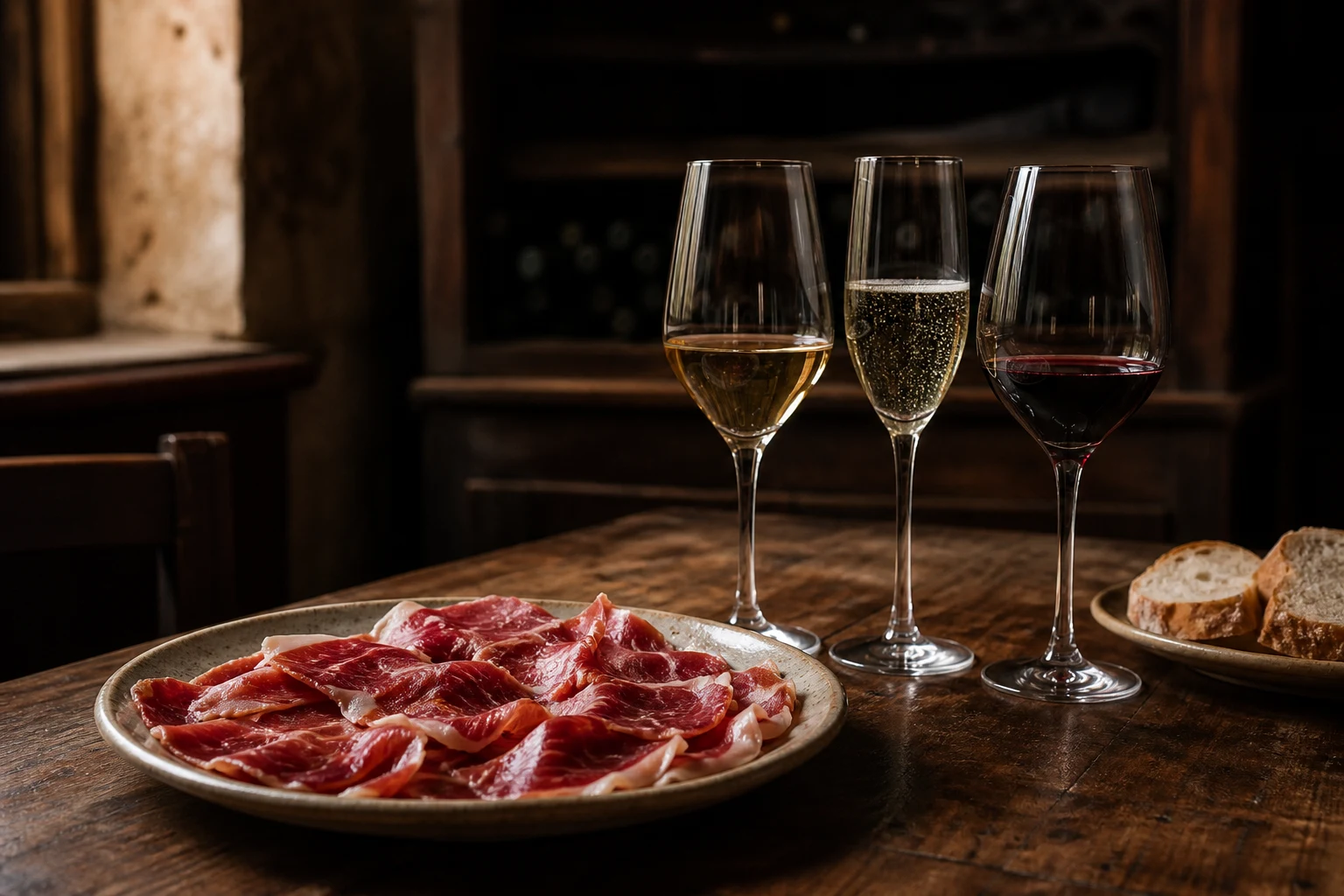
Amontillado combines an initial period under flor with an oxidative phase. It is dry and more complex than a young fino, making it suitable for intense ham and dishes with mushrooms, cheese or stews.
A wine with two forms of ageing
Amontillado begins with biological ageing under flor and continues with oxidative ageing when the flor disappears [1]. This journey explains its greater concentration and complexity.
With ham, that structure becomes useful when the bite includes toasted flavours, mushrooms, mature cheese or a rich sauce.
Serve at 12–14 °C
The official page recommends serving amontillado at 12–14 °C in a white-wine glass [1]. Too cold may hide nuance; too warm may emphasise alcohol.
Pour moderate amounts and close the bottle again. The storage guide indicates that oxidative wines remain sound after opening longer than fino and manzanilla [2].
When to choose it over fino
Begin with fino or manzanilla for gentle slices and light aperitifs. Move to amontillado when the ham is more persistent or forms part of a recipe with intense ingredients.
Do not decide only from the ham’s stated age. Taste the complete bite: sauce, cooking and accompaniments may matter more than the slice.
Ham dishes to try
Mushroom rice with ham, Castilian soup or artichokes with cheese explore amontillado’s dry, intense profile. The official source also recommends it with smoked foods, mature cheeses and spiced dishes [1].
Pour the wine first, then taste the dish without adding extra salt. Adjust the pairing to the finished result.
Common questions
At what temperature should amontillado be served?
At 12–14 °C in a white-wine glass, according to the official style page.
When should I choose amontillado rather than fino?
When the ham or dish is more intense, especially with mature cheese, mushrooms, spices or stews.
Sources and scope
JAMÓN.IM educational overview. Serving and cooking suggestions are editorial starting points. Follow your product label and tool manufacturer’s instructions.