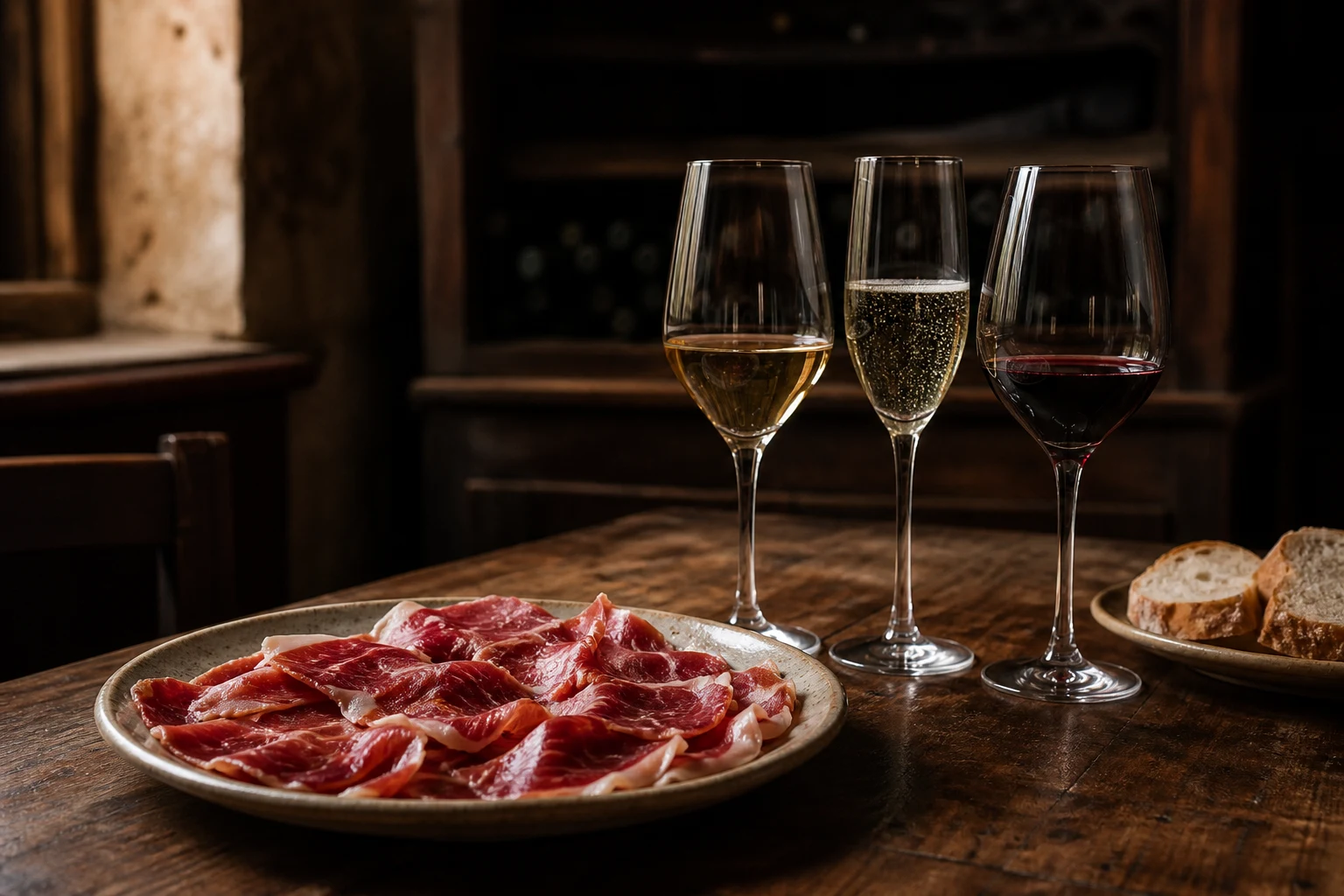
Manzanilla is a dry white wine aged biologically in Sanlúcar de Barrameda. Its fresh, savoury profile can build an aperitif around ham, salted foods and seafood tapas.
What manzanilla brings to ham
The Regulatory Council describes manzanilla as a dry white wine with its own designation, aged in Sanlúcar de Barrameda [1]. It recommends the style with tapas and savoury foods, including cured meats and salted products.
With ham, its lightness can refresh the bite without adding sweetness. This is a pairing starting point: the salt, fat and intensity of each ham can change the result.
Temperature and glassware
The official style page advises serving manzanilla at 6–8 °C [1]. The general service guide suggests 5–7 °C for fino and manzanilla and keeping the bottle well chilled [2].
Use a white-wine glass or a broad catavino. A stem helps prevent the hand from warming the wine quickly.
Manzanilla or fino with ham
Both are dry wines aged biologically, but manzanilla has its own designation and is aged in Sanlúcar. The labels are not interchangeable.
Taste both at a similar temperature with the same slice. Direct comparison reveals differences more clearly than an abstract rule.
Completing the aperitif
Add olives, almonds, fish or seafood to continue the savoury profile that the official source associates with manzanilla [1]. Keep each preparation on its own dish so the ham stays dry.
Tomato toast, artichokes or a cold tapa show how acidity and vegetables alter the wine’s perception.
Common questions
At what temperature should manzanilla be served?
The official style page states 6–8 °C; the general guide recommends keeping fino and manzanilla very cold.
Are manzanilla and fino the same wine?
No. They share biological ageing, but manzanilla has its own designation and is aged in Sanlúcar de Barrameda.
Sources and scope
JAMÓN.IM educational overview. Serving and cooking suggestions are editorial starting points. Follow your product label and tool manufacturer’s instructions.