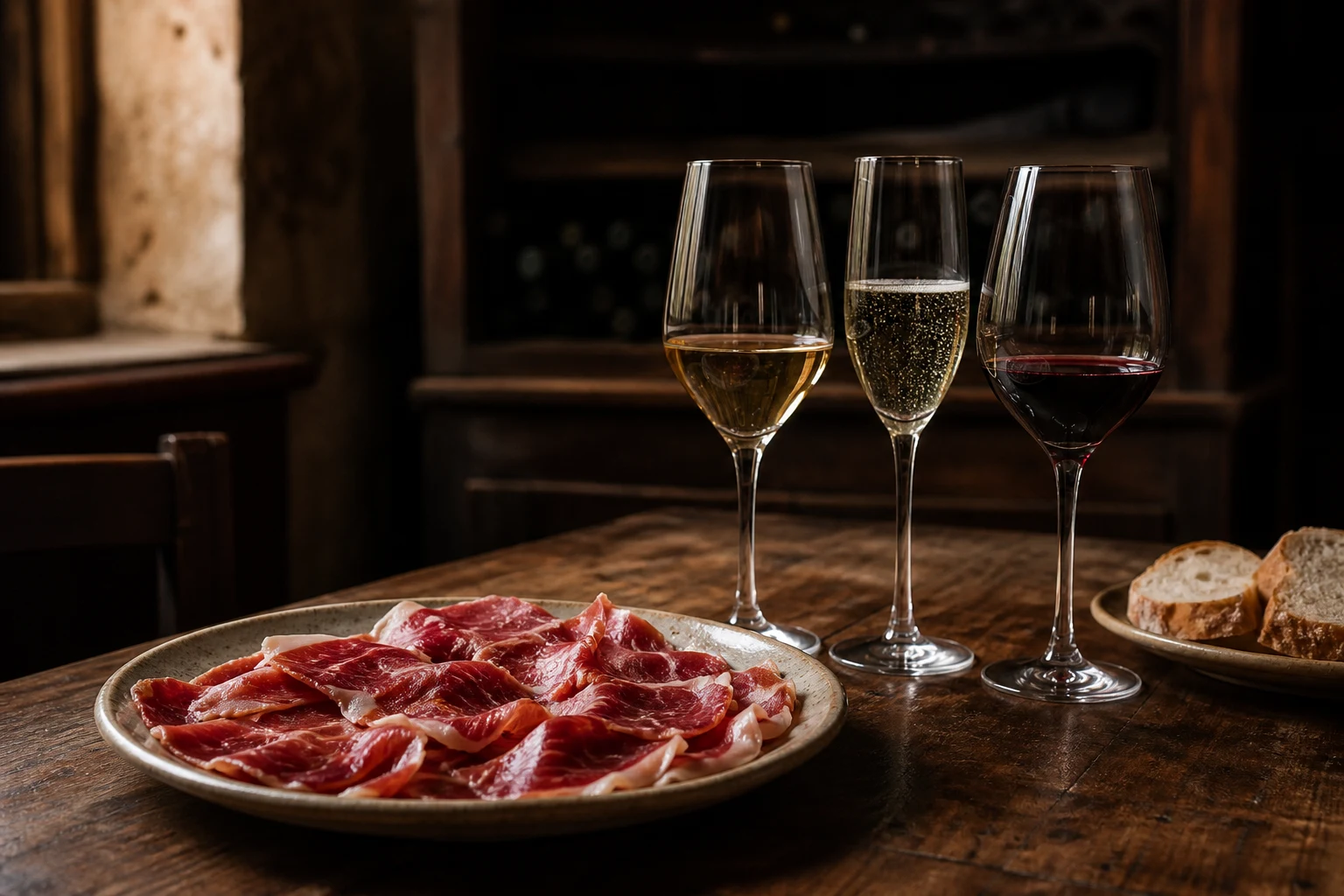
A tapas table works best through contrast: ham served alone, bread and tomato, a vegetable, one hot preparation and a fresh wine. Repeat the ingredient without repeating the same texture.
Build variety with four formats
Begin with a plate of slices to recognise the product. Add one bread tapa, one vegetable tapa and one hot preparation to alternate crisp, succulent, fresh and creamy textures.
You do not need much ham in each recipe. Reserve the most even slices for serving alone and use clean trimmings in croquettes, eggs or stews.
Quick cold tapas
Tomato toast with ham provides acidity, richness and texture without cooking the slice. Ham can also be served with artichokes or cheese, keeping moist ingredients separate until the last moment.
Assemble small amounts and replenish them. This keeps slices flexible and preserves the structure of each tapa.
Hot tapas without drying the ham
With asparagus, peas or pumpkin soup, add the ham at the end when you want it to remain flexible. For a crisp finish, use brief heat and watch closely because a thin slice loses moisture quickly.
Croquettes and broken eggs offer richer textures; balance the table with a vegetable or fresh preparation.
Choose one drink for the whole table
Chilled fino or manzanilla are starting points for savoury tapas; dry cava can accompany a table with fried and varied textures. Always adapt the choice to the dominant dish.
Offer water too and avoid making every tapa require a different wine. One coherent choice simplifies service and makes bites easier to compare.
Common questions
How many different tapas should I prepare?
Four formats generally provide enough variety: ham alone, bread, a vegetable and one hot preparation.
When should ham be added to a hot tapa?
At the end to retain flexibility and aroma; with brief heat when a crisp finish is wanted.
Sources and scope
JAMÓN.IM educational overview. Serving and cooking suggestions are editorial starting points. Follow your product label and tool manufacturer’s instructions.