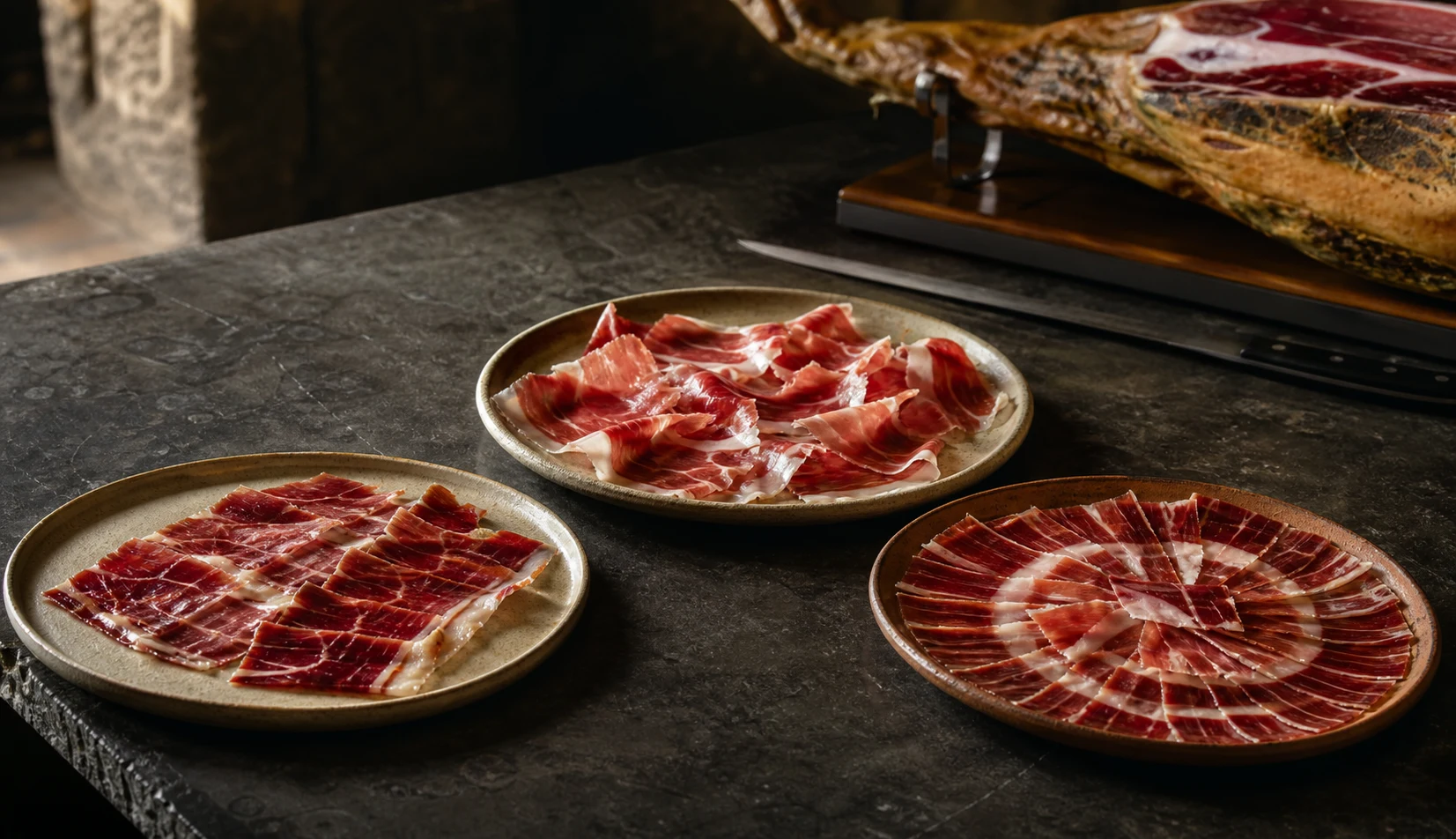
Breed, feeding, curing and certification: learn to read the label before choosing a ham.
The first distinction
Serrano and Iberian ham are not two grades of a single classification. Serrano is associated with white pigs and a curing tradition; Iberian ham is identified by breed, feeding and rearing. Paleta comes from the front leg, ham from the hind leg.
Hoof colour does not replace the legal product name, certification and label.
Serrano: a regulated tradition
The Jamón Serrano TSG specifies salting, resting, drying-maturation and final ageing. The minimum process is 210 days from the start of salting. Final duration depends on weight and the development of each ham. [1]
Time offers a clue: even texture, clean aroma and balanced salt also matter.
Iberian ham: breed and feeding
The standard specifies black for bellota 100% ibérico, red for bellota ibérico, green for cebo de campo ibérico and white for cebo ibérico. Also read the breed percentage and full product name. “Ibérico” does not automatically mean “bellota”. [3]
100% ibérico is used only when both parents belong to the certified Iberian breed. Other permitted percentages must appear on the label. [3]
Bodega, Reserva and Gran Reserva
For non-Iberian cured ham, Bodega or cava requires at least 9 months; Reserva or añejo, 12 months; Gran Reserva, 15 months. These terms do not classify Iberian products. [2]
More months alone do not guarantee higher quality: weight, fat, salt and process control all influence the result.
How to read the label
Check the product name, breed and feeding where relevant, curing time, producer and quality scheme. TSG, PDO and PGI refer to verifiable specifications and controls.
Choose the format for your consumption pattern. A whole ham needs space and carving; sliced ham needs suitable packaging and storage according to its label.
Common questions
Sources and scope
JAMÓN.IM educational overview. Serving and cooking suggestions are editorial starting points. Follow your product label and tool manufacturer’s instructions.