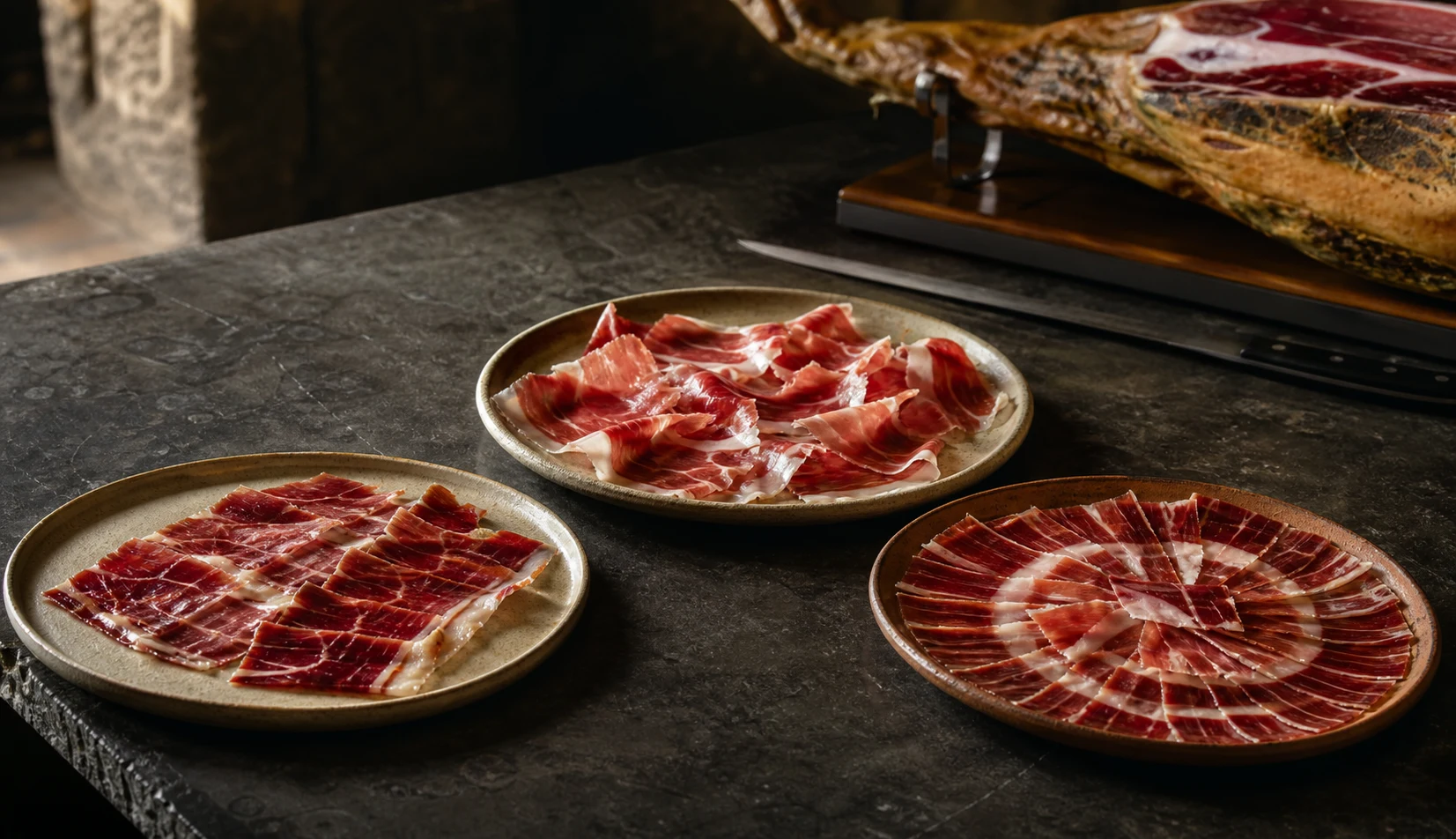
A leg does not provide the same cut across its whole surface. The maza is generally broad and succulent; the babilla narrower and more cured; the punta intense; and the jarrete firm and aromatic. Knowing them helps position and use the ham.
Maza: the broadest face
The maza is the largest visible area when the hoof points upwards. It generally yields broad slices with an appreciable proportion of intramuscular and outer fat.
For frequent consumption, beginning on the maza provides a broad carving face. Keep the plane even and remove only the rind and outer fat needed for that session.
Babilla or contramaza: narrower and more cured
The babilla is on the side opposite the maza. It has less volume and generally dries sooner, so it may feel firmer and more concentrated.
If the leg will be eaten slowly, some carvers begin on this side to prevent excessive drying. The choice depends on consumption rate and the condition of the particular ham.
Punta: intensity near the hip
The punta lies at the end opposite the hoof, close to the hip. Its shape and composition can bring together fat and intense flavours.
When you reach this area, adjust the angle and shorten the slice when the anatomy no longer allows the same plane. Do not force the knife around the bone.
Jarrete and shank: small cuts and full use
The jarrete lies near the tibia and fibula. Its meat is generally firm and aromatic, suitable for small slices or diced pieces when a long, safe cut is no longer possible.
Clean trimmings can enrich croquettes, stews or eggs. The bone can be portioned appropriately for stock, always using safe handling.
Common questions
Which part of serrano ham is the juiciest?
The maza generally offers the broadest cut and an appreciable amount of fat, although every leg is different.
Why can the babilla be drier?
It has less volume than the maza and may lose moisture sooner. Consumption rate and storage also matter.
Sources and scope
- Serrano Ham TSG: product characteristics · Spanish Ministry of Agriculture
- Food safety at home · AESAN
JAMÓN.IM educational overview. Serving and cooking suggestions are editorial starting points. Follow your product label and tool manufacturer’s instructions.