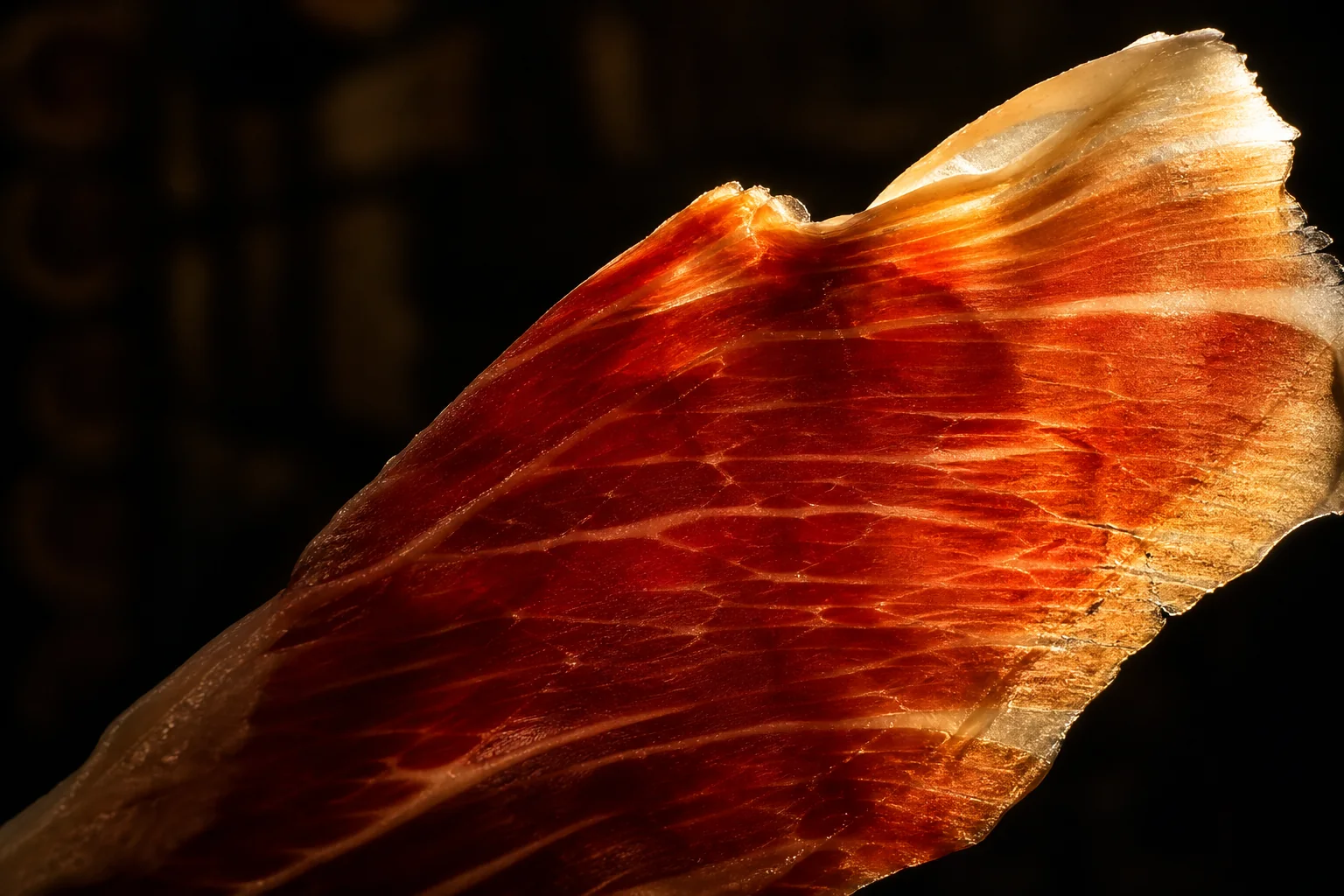
Cured ham provides protein and fat, alongside minerals and some B vitamins. It also provides salt. Composition varies between products: use the nutrition label and the amount you actually serve.
What it provides and what varies
The Spanish Nutrition Foundation’s serrano ham profile describes protein, iron, zinc, phosphorus and several B vitamins. Fat content varies and includes different fatty acids. A generic profile is a reference, not a replacement for your product’s label [1].
| Component | How to interpret it |
|---|---|
| Protein | Check grams per 100 g, then calculate your portion |
| Fat and saturates | Amounts vary; compare both lines on the label |
| Energy | Depends on the product and serving size |
| Salt | Include salt from bread, cheese and other accompaniments |
The label uses 100 g; your plate uses a portion
For any nutrient, multiply its value per 100 g by your serving weight, then divide by 100. The same calculation works for protein, fat, energy and salt.
An illustrative example, not the composition of a specific ham: if a label listed 6 g salt per 100 g, a 30 g portion would provide 1.8 g salt. Calculate 6 × 30 ÷ 100. Repeat with the actual values on your package.
Enjoy it within a varied diet
Protein content does not cancel out salt or turn ham into a health treatment. Spain’s food safety and nutrition agency, AESAN, recommends reducing processed meat and salt while increasing plant foods [2].
As a cooking suggestion, use ham to add intensity to vegetables, pulses or toast, and taste before salting. A meal does not need several salty accompaniments at once.
Three claims to treat carefully
Longer curing does not guarantee a better nutritional composition. Visible fat alone does not tell you the full fatty-acid profile. A slice that tastes mildly salty may still contain a meaningful amount of salt.
Culinary terms such as silky, delicate and intense describe sensations. Nutritional values are checked on the label. If your diet has individual limits for salt or other nutrients, apply them to your actual portion.
Properties that help you cook
Saltiness can season a dish with a small amount of ham; fat and curing aromas help explain its impact on the palate. Add delicate slices at the end to preserve their texture. For crisp ham, use a specific preparation and watch the oven.
Common questions
Does ham have a fixed calorie content?
No. Energy varies between products and with serving size. Use your label to calculate the portion.
Does longer curing mean less salt?
Salt content cannot be deduced from curing months alone. Check the product’s nutrition label.
Sources and scope
JAMÓN.IM educational overview. Serving and cooking suggestions are editorial starting points. Follow your product label and tool manufacturer’s instructions.