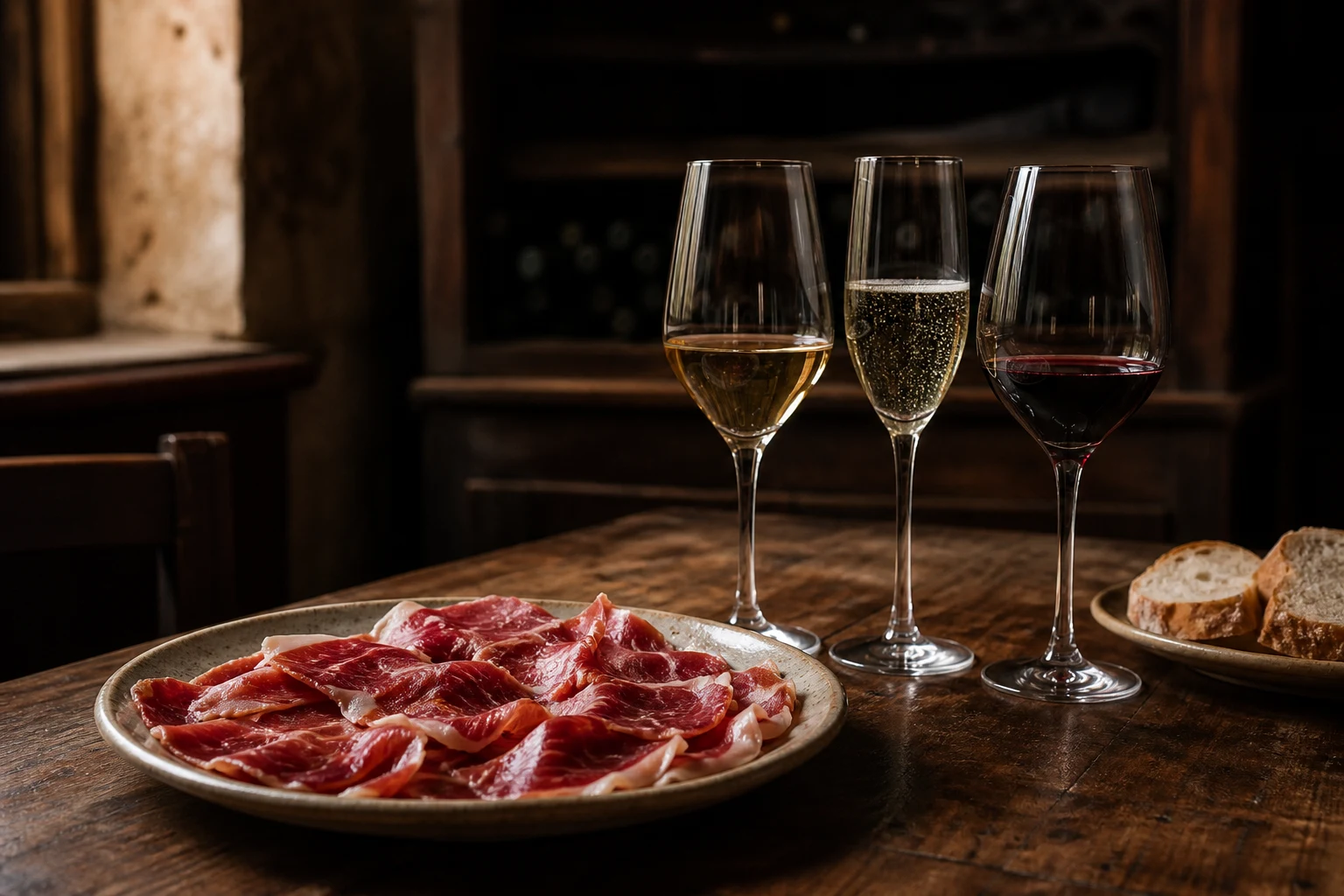
Tasting serrano ham means observing and describing before judging. Serve comparable slices, examine lean and fat, smell, assess texture and record flavour, saltiness, persistence and possible faults in concrete terms.
Prepare a useful comparison
Serve samples on separate, identified plates in similar portions. Keep slice thickness and resting time consistent so the comparison does not depend on carving or temperature.
Use water and plain bread between samples. Avoid strong perfume, smoke and highly spiced food immediately beforehand, as they make subtle aromas and flavours harder to recognise.
Examine the cut, then smell
The official TSG specification describes lean meat ranging from pink to purplish red, glossy fat and a homogeneous cut without a dried outer surface. It also defines the fat as glossy, unctuous, white to yellowish and aromatic [1].
First examine colour, gloss, fat distribution and uniformity. Then bring a slice close without rubbing it and record aroma intensity and character; the specification requires a pleasant, characteristic aroma with no abnormal odours [1].
Assess texture, flavour and persistence
Taste a portion containing lean and fat. The specification characterises the texture as homogeneous, not very fibrous and neither pasty nor softened; it describes the meat as delicate and lightly salted, without abnormal flavours [1].
Describe initial resistance, ease of chewing, the fat's unctuousness, salt intensity and how long the flavour remains. These editorial notes make samples easier to compare without turning personal preference into a quality rule.
Use a short, repeatable tasting sheet
Record five fields: appearance, aroma, texture, flavour and persistence. For each, write one or two descriptors and a simple intensity —low, medium or high— together with the exact sample name.
Keep official requirements separate from your impressions. Colour, uniformity, absence of surface dryness, texture and the absence of abnormal odours or flavours come from the specification; enjoyment, preferred intensity and favourite pairing are personal judgements.
Common questions
What should you examine first when tasting serrano ham?
Start with the cut: lean colour, fat gloss and distribution, uniformity and the absence of a dried outer surface.
How can two hams be compared without biasing the tasting?
Use slices with similar thickness and temperature, identified samples, water and plain bread, and one shared tasting sheet.
Sources and scope
JAMÓN.IM educational overview. Serving and cooking suggestions are editorial starting points. Follow your product label and tool manufacturer’s instructions.