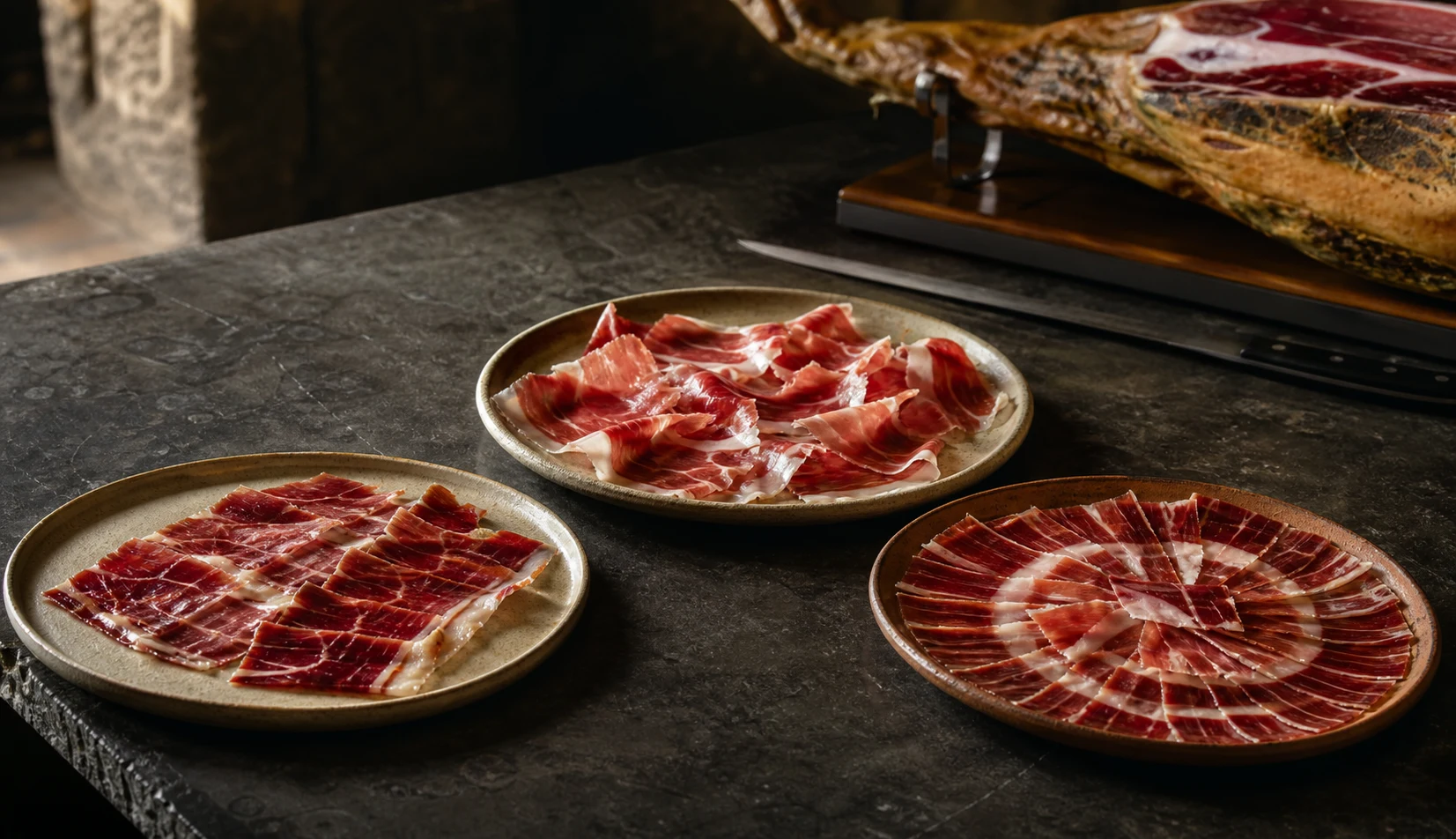
Ham comes from the hind leg and shoulder from the fore leg. Anatomy changes size, bone proportion, carving and yield; neither option is universally better.
Hind leg versus fore leg
Ham and shoulder name different anatomical cuts. Ham comes from the hind leg; shoulder from the fore leg. The Iberian quality standard preserves this distinction in its sales names [1].
Shoulder is generally smaller and has a different relationship between meat, fat and bone. Ham provides a larger carving surface and potentially longer slices.
How carving changes
Shoulder brings bones and changes of plane together in less space, so the angle must be adjusted earlier and small slices accepted. On a ham, the maza allows a broad carving face to be maintained for longer.
For both, secure the piece, carve away from the hand and use suitable knives. Do not force a long slice when the anatomy indicates a change of plane.
Weight and yield are not the same
A whole piece includes bone, rind and outer fat, so purchase weight does not equal served product. Usable proportion also depends on trimming and carving skill.
Compare price according to format and actual use: whole, boned or sliced. For slow consumption, a smaller piece may reduce the time its carving face remains open.
Which suits your table
Choose ham when you want a longer carving run and serve groups frequently. Consider shoulder when you prefer a smaller piece and accept more complex carving anatomy.
Designation, labelling, storage and service matter more than a general rule. Always check the specific product you are buying.
Common questions
Is shoulder simply a small ham?
No. It comes from the fore leg and has its own anatomy, with a different relationship between meat, fat and bone.
Which piece is easier to carve?
Ham generally provides a broader surface; shoulder concentrates more changes of plane and bones into less space.
Sources and scope
- Iberian product quality standard · Spanish Ministry of Agriculture
- Serrano Ham TSG · Spanish Ministry of Agriculture
JAMÓN.IM educational overview. Serving and cooking suggestions are editorial starting points. Follow your product label and tool manufacturer’s instructions.